
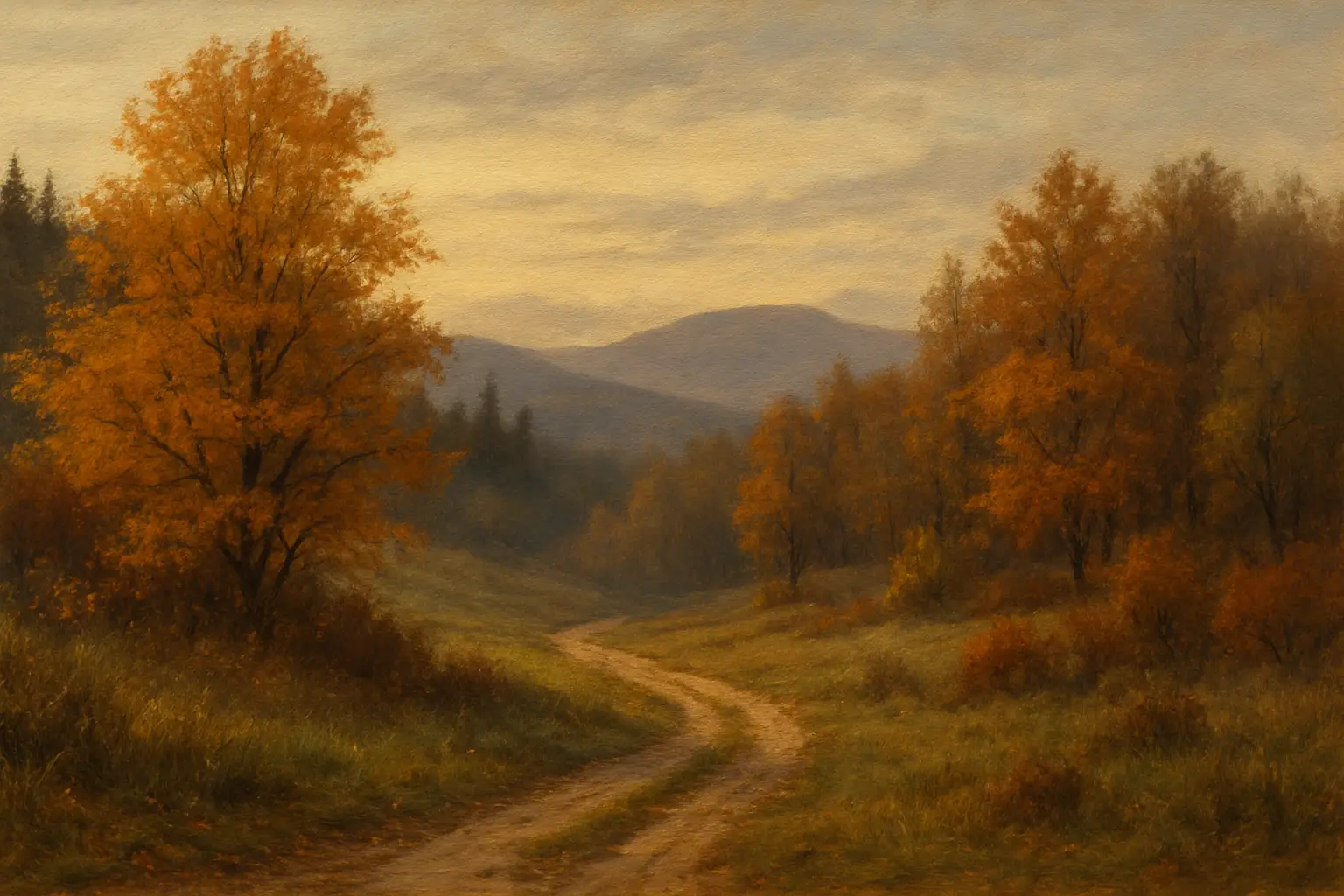
“Reluctance” closed Frost’s first book A Boy’s Will in 1913, and it’s one of those poems that captures a feeling everyone knows but few can articulate. It’s about not wanting things to end. Not just being sad they’re ending, but actively resisting, refusing to accept it gracefully. Frost uses autumn turning to winter as his framework, but he’s really talking about any ending: relationships, youth, hope, whatever felt vital and alive that’s now slipping away.
What makes it powerful is Frost calls acceptance “treason.” Not sadness, not resignation, but treason. Like yielding to endings is betraying what mattered. That’s a strong stance, and it validates something we all feel: when things end, part of us wants to fight it even when fighting makes no sense. The poem gives voice to that stubborn refusal to let go quietly.
Table of Contents:
- The Verse: Reading Frost’s 1913 Meditation on Endings
- Beyond the Withered Aster: Decoding the Conflict Between Heart and Feet
- Loyalty, Defiance, and the Drift of Things: A Deeper Look
- The Walking Pace of Loss: Analyzing the Poem’s Rhyme and Rhythm
- A Boy’s Will: How Frost’s Debut Collection Closed with a Warning
- Permission to Resist: Why This Early Poem Still Speaks to the Heartbroken
- "Yield With a Grace to Reason": The Words That Frost Challenges
- Daniel’s Perspective: The Stubborn Oak Leaf
- Final Thoughts: Honoring What Matters Through the Fight to Stay
- Explore More Frost
The Verse: Reading Frost’s 1913 Meditation on Endings
First published in 1913 in Robert Frost’s debut collection A Boy’s Will. This poem is in the public domain in the United States.
Reluctance by Robert Frost
Out through the fields and the woods And over the walls I have wended; I have climbed the hills of view And looked at the world, and descended; I have come by the highway home, And lo, it is ended.
The leaves are all dead on the ground, Save those that the oak is keeping To ravel them one by one And let them go scraping and creeping Out over the crusted snow, When others are sleeping.
And the dead leaves lie huddled and still, No longer blown hither and thither; The last lone aster is gone; The flowers of the witch-hazel wither; The heart is still aching to seek, But the feet question ‘Whither?’
Ah, when to the heart of man Was it ever less than a treason To go with the drift of things, To yield with a grace to reason, And bow and accept the end Of a love or a season?
Beyond the Withered Aster: Decoding the Conflict Between Heart and Feet
Poem opens with someone describing a walk. Through fields, woods, over walls, up hills to look at the world, then back down and home. Sounds pleasant until that last line: “And lo, it is ended.” Not just the walk. Something bigger. The phrasing “it is ended” carries finality beyond a simple return home.
Second stanza gets specific about what’s ending. Autumn. Leaves are dead on the ground. Most of them anyway. Oak trees are holding onto a few, letting them go gradually, one by one. They scrape and creep across the snow after everything else has fallen. That image of the oak “keeping” leaves longer than other trees, that’s the whole poem in miniature. Clinging to what’s already dead, letting go slowly and reluctantly.
Third stanza widens the view. Dead leaves everywhere, no wind moving them anymore. Last aster flower is gone. Witch-hazel withering. Everything showing decline. Then Frost drops the key line: “The heart is still aching to seek, / But the feet question ‘Whither?'” Your heart wants to keep going, keep searching, keep moving forward. But your feet, your practical side, your reason, asks where? Where would you even go? There’s nowhere left.
Final stanza is where Frost makes his argument. “When to the heart of man / Was it ever less than a treason / To go with the drift of things?” Treason. Betrayal. To accept endings gracefully, to yield to reason, to bow and accept when a love or a season ends, that’s treason. Against what? Against the vitality that was, against the importance of what’s being lost, against your own heart that still wants to seek.
The meaning is about that gap between knowing something’s over and accepting it. Autumn is clearly ending, winter’s coming, the signs are everywhere. But accepting that feels like giving up, like betraying what summer and fall were. Same with love or any other loss. You can see it ending, understand it logically, and still refuse to yield. That refusal, that reluctance, isn’t weakness or denial. It’s loyalty to what mattered.
Loyalty, Defiance, and the Drift of Things: A Deeper Look
Endings You Can’t Stop
The poem is saturated with finality. Leaves dead, flowers withered, last aster gone, winter coming. Nature doesn’t ask permission. Seasons turn regardless of how you feel about it. That inevitability is what makes the resistance matter. You can’t stop it but you can refuse to accept it gracefully. That defiance against inevitability is very human.
Heart Versus Reason
“The heart is still aching to seek, / But the feet question ‘Whither?'” Perfect split between what you feel and what you know. Your heart hasn’t caught up to reality. It still wants forward motion, still believes in seeking and finding. But your reason, embodied in your feet that actually have to take steps, knows there’s nowhere to go. That disconnect between emotion and logic is where reluctance lives.
Stubbornness as Loyalty
Frost frames resistance to endings as loyalty rather than foolishness. To yield gracefully is “treason.” That’s a strong word. Means giving in too easily dishonors what’s being lost. If something mattered, you owe it resistance. You owe it the reluctance to let go. Otherwise, you’re saying it wasn’t important enough to fight for, even when fighting is pointless. The stubbornness itself is the tribute.
Nature Mirrors Human Experience
Those oak leaves clinging longer than they should. That’s not just trees. That’s people holding onto relationships, jobs, youth, whatever past their expiration. The leaves will fall eventually. The oak can’t actually keep them. But it tries anyway. Nature becomes a mirror for human behavior, showing our patterns reflected back at us in a way that makes them feel universal rather than personal.
Love and Seasons Linked
“The end / Of a love or a season” puts romantic loss and natural cycles in the same category. Suggests they’re governed by similar forces, both involving something vital fading despite your wishes. By linking them, Frost makes personal heartbreak feel as inevitable as weather while making seasonal change feel as painful as lost love. The comparison works both directions.
The Walking Pace of Loss: Analyzing the Poem’s Rhyme and Rhythm
Four stanzas, six lines each. ABCBDD rhyme scheme in each. That structure creates a regularity that mirrors the inevitability of seasonal change. Everything follows its pattern whether you like it or not.
The rhythm varies but leans toward iambic, that da-DUM heartbeat pattern. Gives it momentum, a walking pace that matches someone trudging through a landscape they don’t want to leave. The meter isn’t strict, though. Frost lets it flex with natural speech, which keeps it from feeling too formal for the emotional content.
Short lines in places, like “And lo, it is ended.” That brevity hits hard. Could’ve been longer, more elaborate, but the starkness makes it final. Same with “The last lone aster is gone.” Simple statements that carry weight through understatement.
The final stanza is one long sentence structured as a question. “Ah, when to the heart of man / Was it ever less than a treason…” That rhetorical question format lets Frost make his point without preaching. He’s not telling you it’s treason. He’s asking when it wasn’t. The answer is never, which means the statement stands as truth without being declared as such.
A Boy’s Will: How Frost’s Debut Collection Closed with a Warning
This closed Frost’s debut collection A Boy’s Will in 1913. Starting your poetry career with a book about youthful energy, then ending it with a poem about resistance to endings, that’s a choice. Suggests even at the start, Frost understood loss was coming. The collection title references that Longfellow poem about youthful mistakes, but ending with “Reluctance” complicates that optimism.
1913 America was pre-WWI, still in that Progressive Era where things felt like they were improving and modernizing. A poem about refusing to accept change and endings might’ve felt out of step with cultural momentum toward the future. But Frost wasn’t interested in cultural moment. He was interested in permanent human feelings.
The New England setting matters. Those oak leaves, the asters, witch-hazel, the crusted snow, all specific to that landscape Frost knew intimately. He wasn’t making nature generic. He was using exact observed details to make universal points. That specificity grounds the abstraction, makes the meditation on endings feel physical rather than philosophical.
As Frost’s career developed, this poem became less prominent than his later famous works. “The Road Not Taken,” “Stopping by Woods,” those overshadowed it. But for readers who find it, “Reluctance” often becomes a favorite precisely because it’s less known. It feels like discovering something personal Frost wrote before fame changed his voice.
Permission to Resist: Why This Early Poem Still Speaks to the Heartbroken
It validates a feeling people often suppress: not wanting to accept endings gracefully. Society pushes acceptance, moving on, letting go. Frost says no, actually, fighting against endings even when you can’t win, that’s not weakness. That’s loyalty. That permission to resist matters.
The poem demonstrates Frost’s range early. Before the famous accessible narratives, he was already writing emotional truth in compressed form. Four stanzas to capture the entire dynamic of loss and resistance. That economy shows craft developing.
It connects natural observation to human emotion without forcing the link. The oak keeping leaves isn’t labeled as metaphor. It’s just described. But the connection to human behavior is obvious without being stated. That trust in readers, letting them make connections, is Frost’s signature move even this early.
From a teaching perspective, it opens discussions about when acceptance is healthy versus when resistance is necessary. About how we honor what’s lost. About the difference between denial and defiance. The poem doesn’t answer these questions, just raises them, which makes it valuable for exploration.
The poem also shows how traditional forms can handle complex emotions. Rhymed stanzas, regular structure, but content that’s psychologically sophisticated. Proves you don’t need experimental form to express difficult truths.
“Yield With a Grace to Reason”: The Words That Frost Challenges
“And lo, it is ended.”
That “lo” makes it biblical, weightier than just “it’s over.” Elevates a walk’s end into something significant. The brevity after building up the walk makes it land hard.
“Save those that the oak is keeping / To ravel them one by one”
The oak “keeping” leaves is such a human verb applied to a tree. Creates that immediate connection between natural behavior and human reluctance. That gradual letting go, one by one, that’s exactly how people release what they’re losing.
“The heart is still aching to seek, / But the feet question ‘Whither?'”
The conflict between wanting and knowing. Your emotions haven’t accepted reality yet. Your body understands there’s nowhere to go. That split is where all reluctance lives, in that gap.
“Ah, when to the heart of man / Was it ever less than a treason / To go with the drift of things”
Calling acceptance “treason” is the poem’s boldest move. Suggests yielding to endings is betrayal. Frames resistance as loyalty rather than stubbornness. Validates the fight even when fighting accomplishes nothing.
“And bow and accept the end / Of a love or a season?”
Linking love and seasons in the same phrase makes personal loss feel as inevitable as weather while making weather feel as painful as heartbreak. The comparison works both ways simultaneously.
Daniel’s Perspective: The Stubborn Oak Leaf
Having lived through enough New England Novembers to know that “the heart’s sleep” is a necessity, I’ve always found the most striking image in this poem to be the oak leaves. Most trees let go, but the oak clings to its “dead” leaves until the new buds literally push them off in the spring.
To me, this poem is a masterclass in the dignity of the holdout. The world tells us there is a “proper” time to let go of a dream, a grief, or a season, but Frost is defending the part of the human spirit that refuses to “yield with grace.” I think we all have those moments where we stand in the “withered bracken” and feel like the only things left moving. Frost isn’t saying that change won’t happen; he’s saying it’s okay to hate it. It’s a poem for anyone who has ever felt like the last person at the party, refusing to believe the “gold” is really gone.
Final Thoughts: Honoring What Matters Through the Fight to Stay
“Reluctance” is Frost refusing to pretend letting go is easy or natural. He knows autumn must become winter, knows leaves must fall, knows endings are inevitable. But he argues accepting them gracefully feels like betrayal. The heart wants to keep seeking even when the feet know there’s nowhere left to go. That gap between emotion and reason is where the poem lives.
What makes it last is the honesty. Most poetry about endings either wallows in grief or pushes toward acceptance and growth. Frost does neither. He just says yeah, it’s ending, and yeah, that sucks, and no, I’m not yielding without a fight even though fighting is pointless. That refusal to be reasonable, to be graceful, to accept what can’t be changed, that’s presented as valid response rather than character flaw.
The oak keeping leaves longer than it should. The heart aching to seek with nowhere to seek to. The feet questioning whither. These images capture being stuck between what’s ending and what comes next, not wanting to move forward into the emptiness. That’s a universal human position. Frost gave it language and called the resistance “loyal” rather than “pathological,” which is probably what we all need to hear when we can’t let go.
Explore More Frost
If you enjoyed our analysis, keep exploring Frost’s works with the following articles:
- The Road Not Taken by Robert Frost: Analysis and Interpretation
- Nothing Gold Can Stay by Robert Frost: Analysis and Interpretation
- Stopping by Woods on a Snowy Evening by Robert Frost: Analysis and Interpretation
About the Author:
I’m Daniel Abbott and I’ve spent years reading Frost against the backdrop of the New England seasons. My goal with these articles is to move past the textbook jargon and look at the real human grit behind the verse. Thanks for reading along.